

On the recommendation of a relative who went on international workcamps in their youth, I applied for the Maki village workcamp near Japan’s northern alps and found myself excitedly making my way there at the beginning of June this year.
Maki village has a fifty year history as an inclusive, organic and self-sufficient community in this relatively isolated part of Japan. It is part of the greater Kyoda Gayusha network of communities, who are especially committed to supporting people with disabilities to live fulfilled lives around others. As volunteers, we were there to help with big seasonal jobs as well as generally gardening and maintenance, which would go towards feeding the community for another year.
It was clear before we arrived that some elements of the work might challenge us. For instance, the only way to access Maki village was via a two-hour walk with all our gear through hilly forest. Also, our work days were long – starting at 6am and not finishing until about 5pm. Accommodation was simple. We shared rooms in a traditional Japanese Gassho-style (thatched roof) house, where little critters kept us on our toes.
But we had a really phenomenal time. Waking up to gorgeous views of the Japanese alps over the valley was such a special way to start each day, the weather was consistently summery, and the volunteer group and village residents chatted away as we worked, which meant the days didn’t feel terribly long. There was a good mix of different jobs – planting rice seedlings, stripping trees, working on garden beds, milking the feisty resident goat (mostly unsuccessfully), shelling soy beans, turning honey, and repairing paths. It was strenuous but satisfying to be working solidly each day, and getting work done that directly helped this community’s capacity to sustain itself.
There was also a fantastic array of cultural and leisure experiences during our stay – cooking over a ground fire, pounding rice to make mochi, folding gyoza, a bonfire night with sparklers, practicing Japanese calligraphy and of course, eating an incredible selection of Japanese dishes including miso soup, fried rice, soy beans, kare, tofu, Japanese plums and traditional herbs fried in tempura.
By far, the loveliest part of the workcamp was the cultural exchange with both Maki residents and the other volunteers over our thirteen days together. We had a great time stumbling through bits of the Japanese language with our entertaining hosts and marvelling cross-culturally at the wonder of our natural surrounds. I feel very lucky to have had this experience in such a unique and isolated part of Japan, grateful to our generous hosts, and I look forward to more workcamps in future.
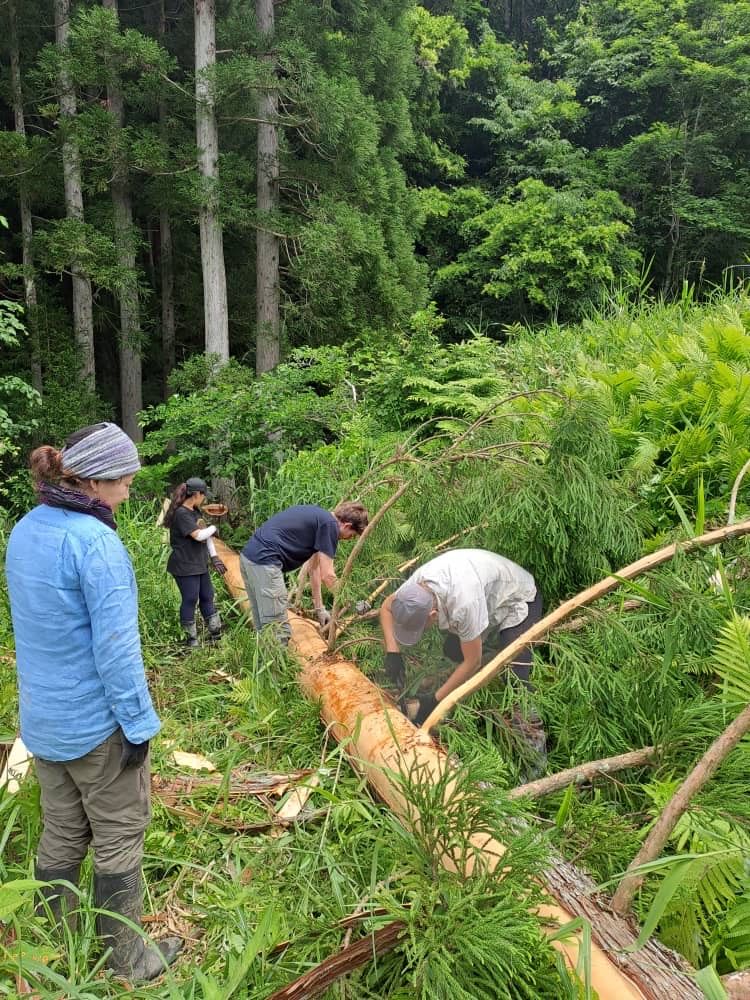
Stripping bark from felled trees so that the trunks would dry out insect-less before being used for roof repair on the traditional village houses.
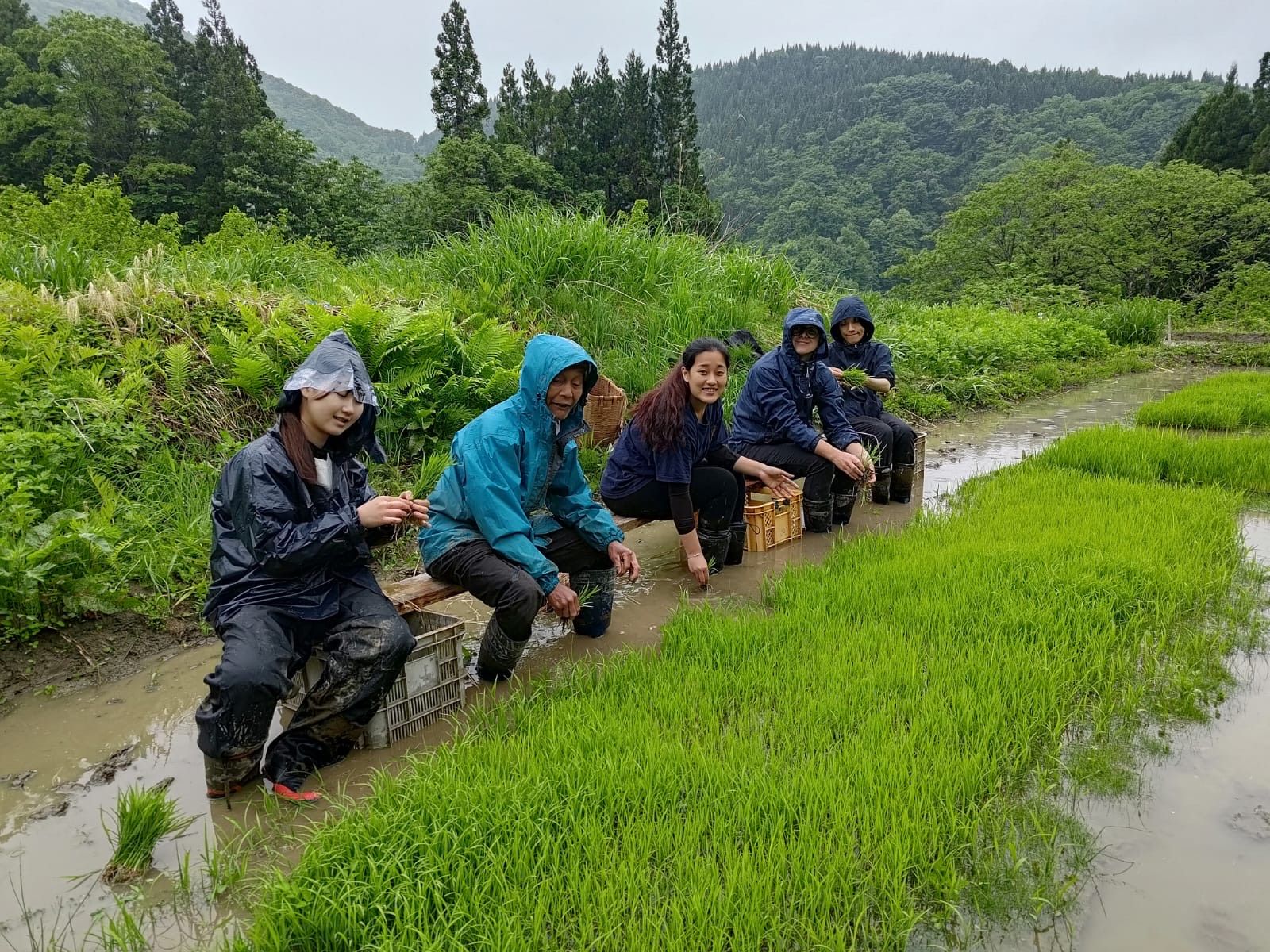
Our volunteer group harvesting seedlings ready for transplanting into the fields.
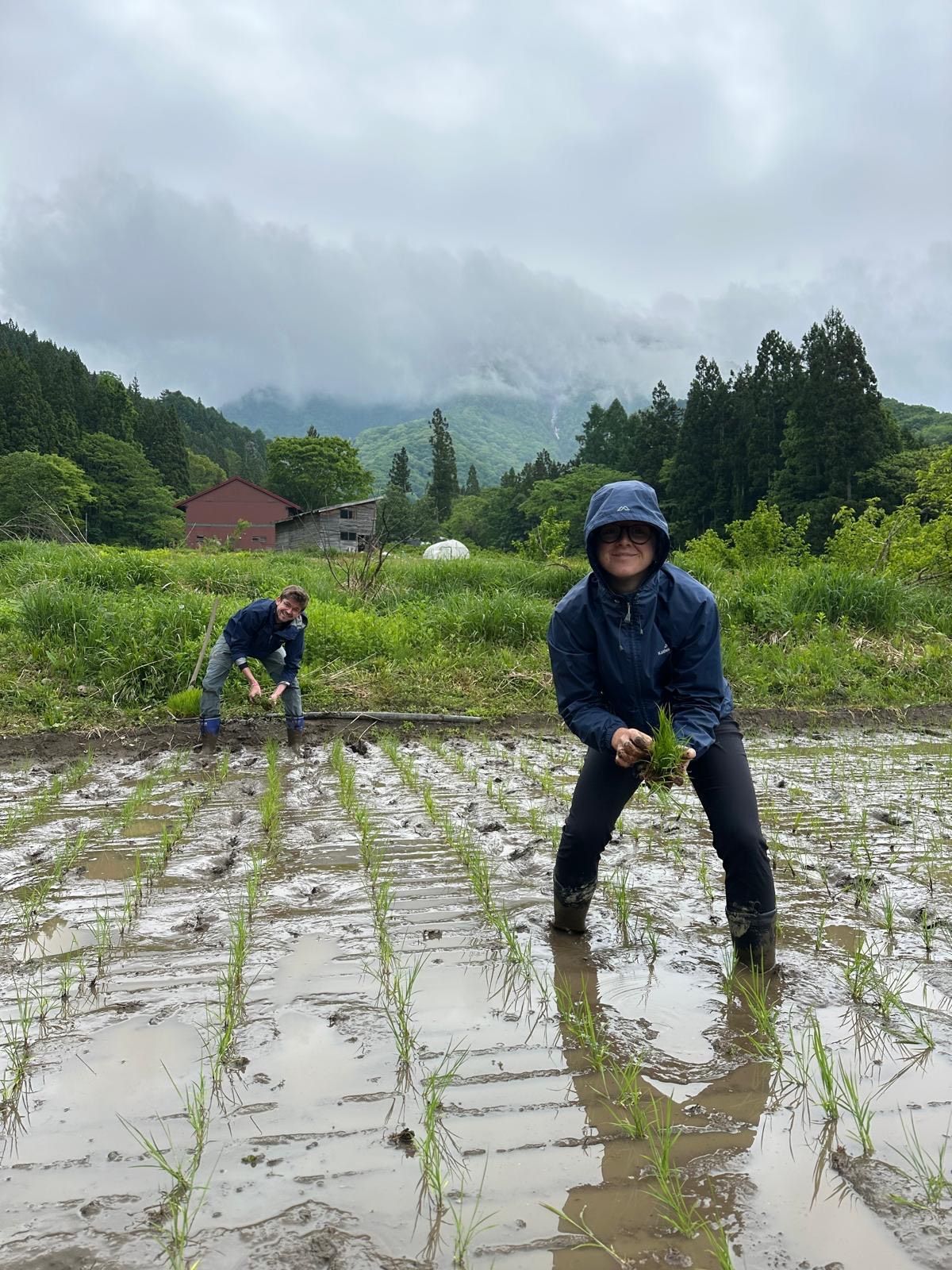
Rain on our first day planting rice seedlings.
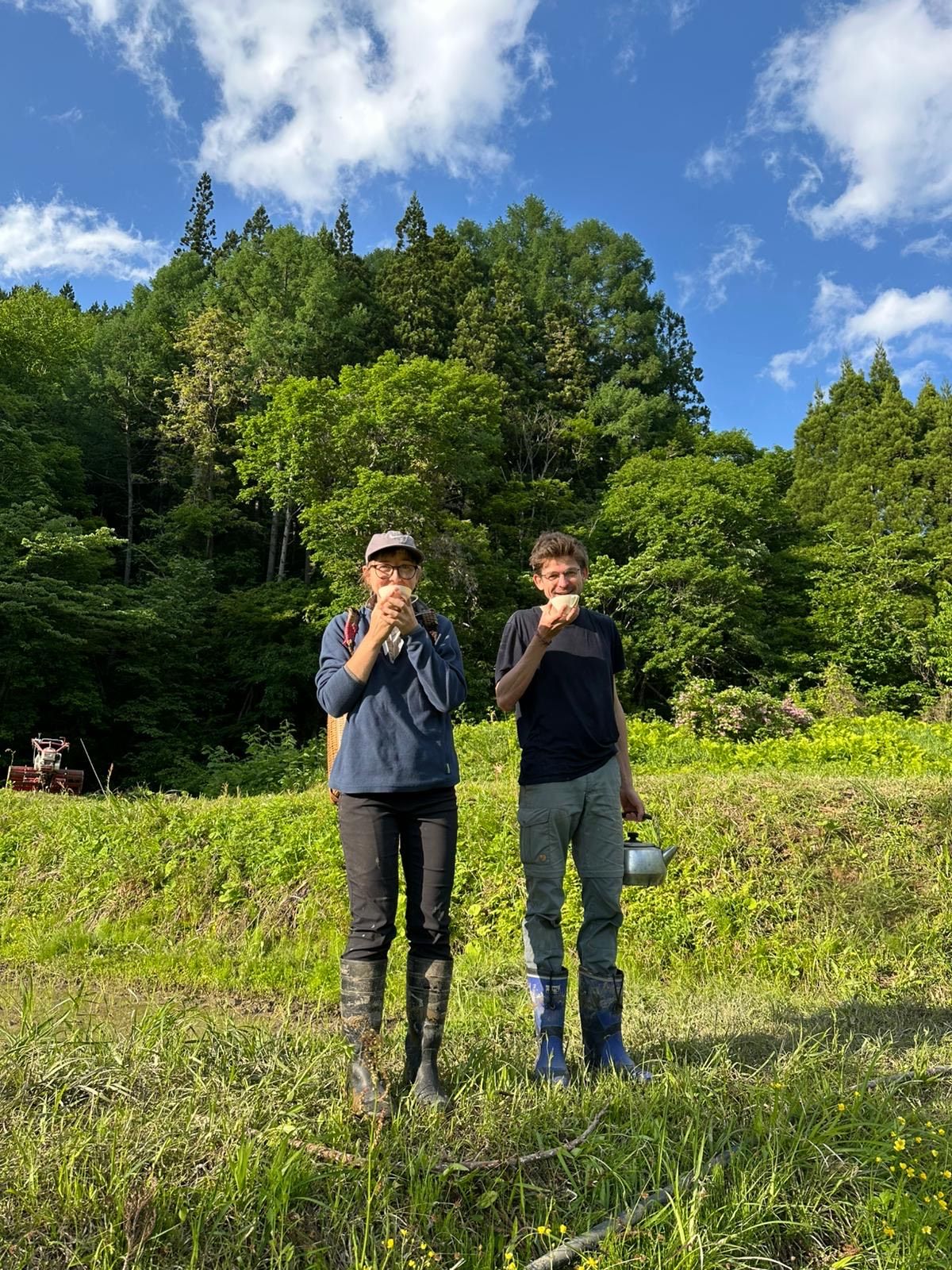
Afternoon tea break.
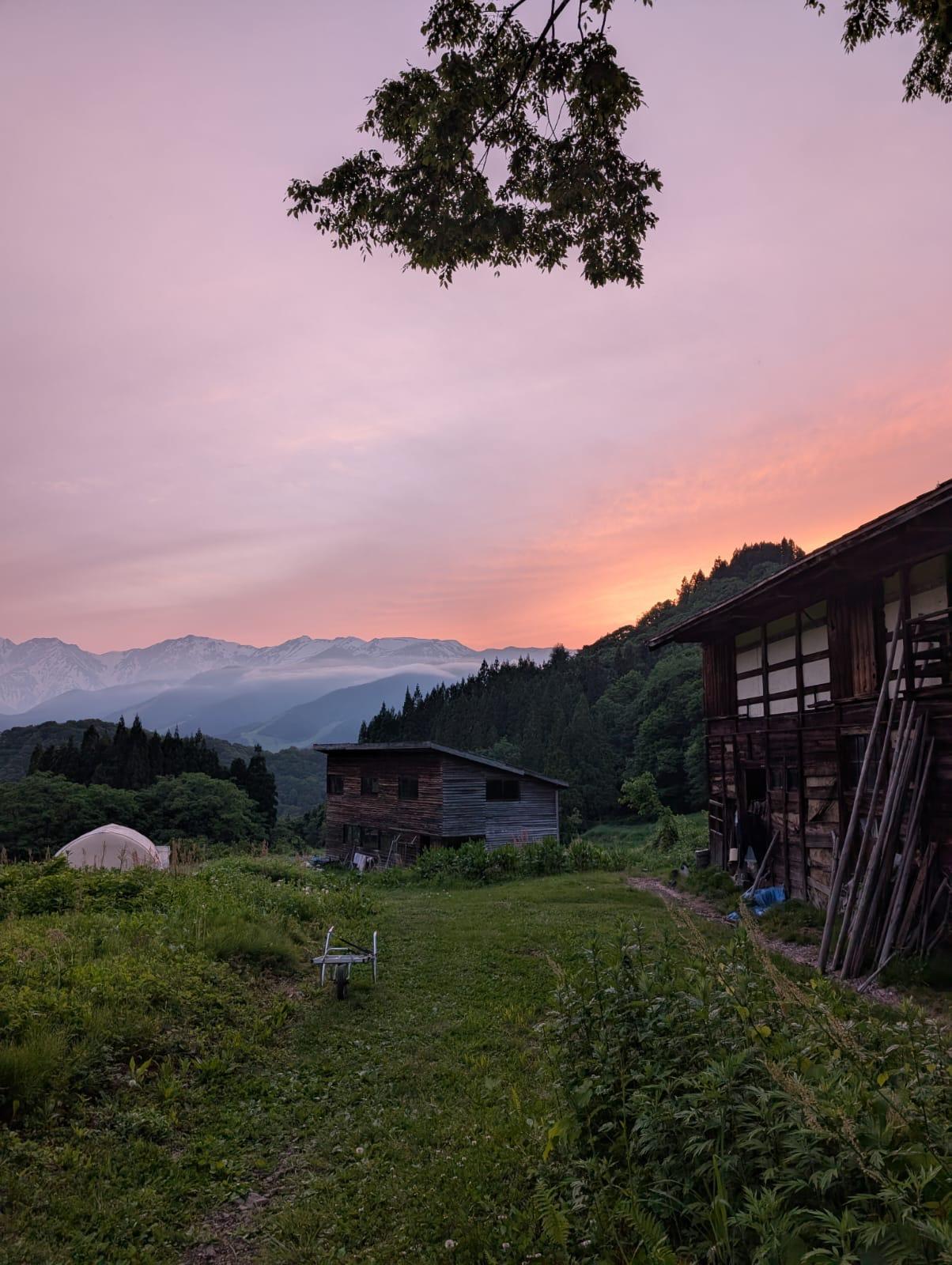
Amazing sunset over the alps; our village house in the foreground.
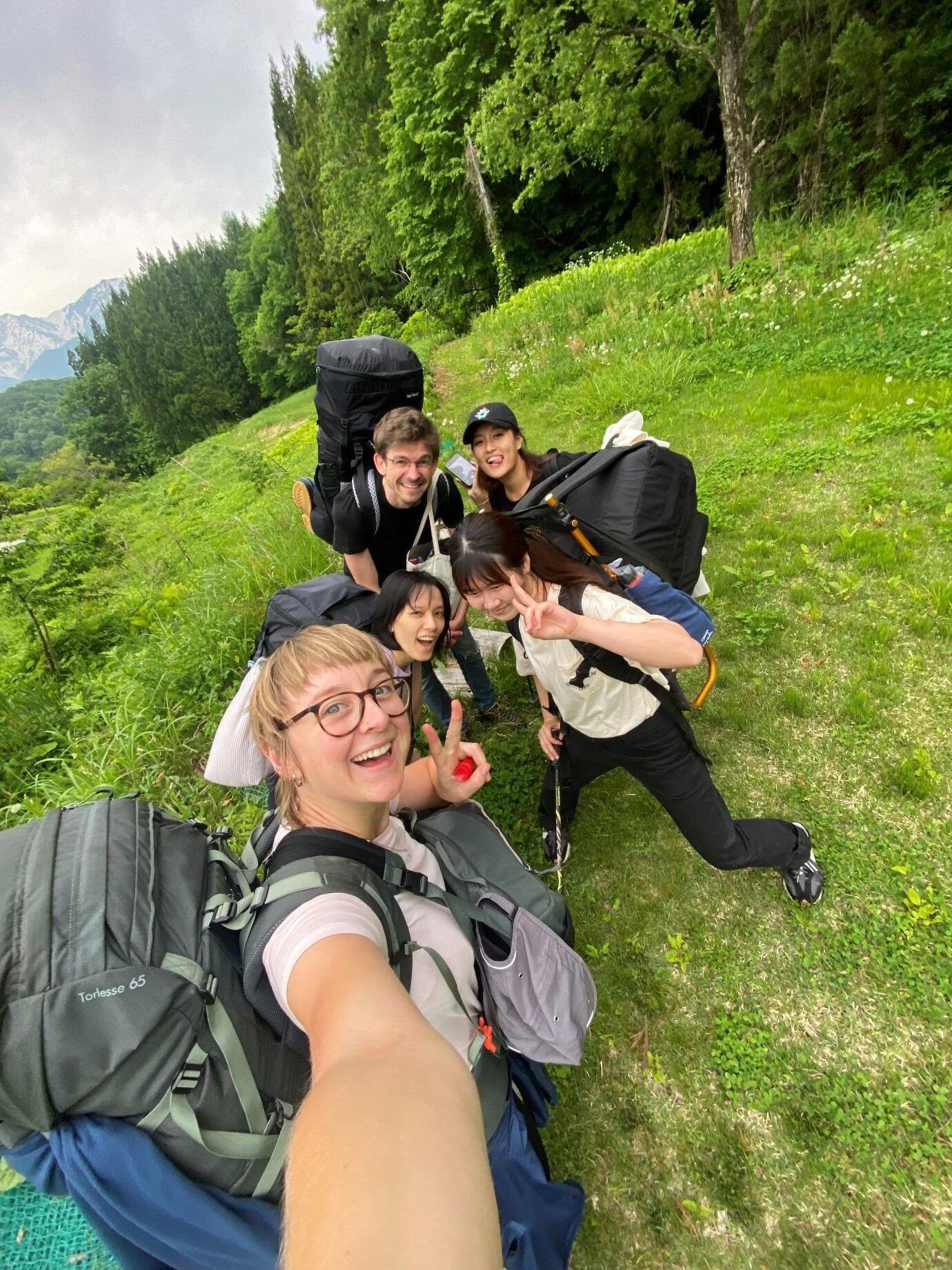
The Maki volunteers on our first day, from L-R: Australia, Khue (from Vietnam), Chris (from Germany), Yelena (from Hong Kong) and Rico (from Japan).
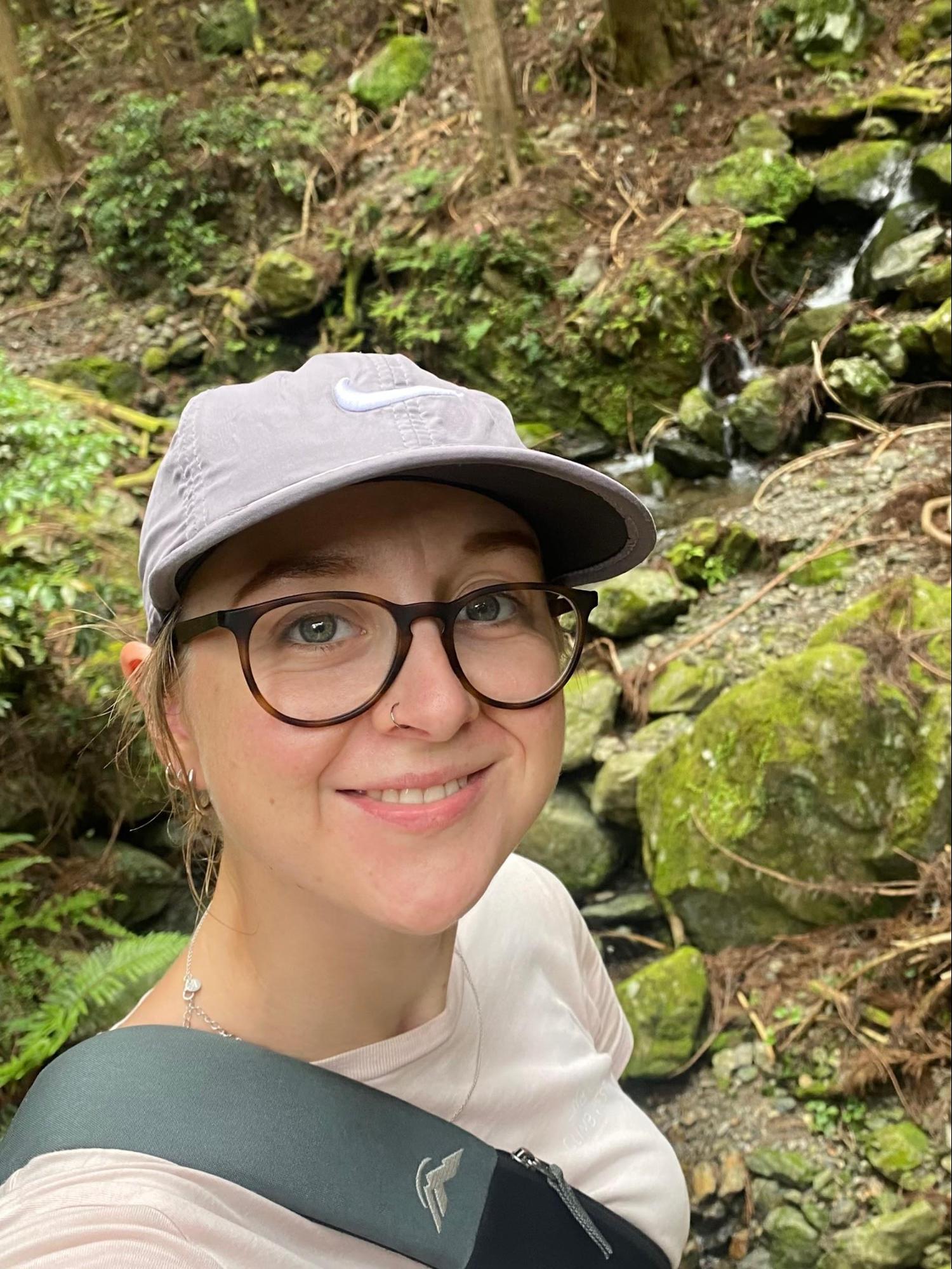
Headshot: