
Members Area

HomeMembers Area

MEMBERS AREA

Report on the International Peace Research Association (IPRA) conference

By Professor Helen Ware

Theme “Peace, Resistance Reconciliation”

In Māori “I Te Rongo i Tau, Te Riri i Tau, Te Ringa i Kotuia” there is not a Māori word for reconciliation – this says linking arms together. 

The conference took place in New Plymouth, New Zealand/ Aotearoa.  5th to 8th November.  It was a very friendly conference with a strong emphasis on grass-roots activities and indigenous activism for peace and justice. Professor Kevin Clements’s opening address was a great challenge to his listeners. As he emphasised: “IPRA and its founders were able to develop theories that worked in the past because there was a liberal international rules-based order (albeit a biased order in favour of the West). In this order, it was possible to devise collaborative and rational solutions to the problems of the day. Regional and global institutions were not under attack and vilified as they are today. The United Nations was never able to fulfil its goals because of P5 dominance of the Security Council, but it was respected for its human rights and humanitarian work, and rational evidence -based solutions to wicked problems were encouraged and applied. None of our peace research ancestors could have imagined the chaos generated by the Trump 2.0 presidency……. The world now has 88 democracies compared to 91 autocracies for the first time in over 20 years”.   

The Professor’s analysis of where we are now is powerful and accurate, but, to this researcher, his view of where we are going is as unrealistic as it is attractive. “Peace” he argues “is not something given by the powerful (especially not by the autocrats) – it is something grown, relationally and locally, through trust, truth-telling, personal and social transformation”. For the families of those who died yesterday or who are going to die tomorrow of bombs, bullets or starvation in Gaza, Sudan or Ukraine, peace given by an autocrat would still be a great outcome. Galtung famously distinguished between negative peace when the guns are silent and positive peace when justice and transformation have occurred. This IPRA Conference was largely devoted to positive peace, to the neglect of negative peace and the need to first stop the killing. Clement’s address concluded with an invocation to become “a global tide of compassion, creativity, and courage, flowing from Aotearoa to every fractured corner of the world”. Lovely words, but hardly relevant to the Israeli conscripts, the Russian prisoners released to fight in snow topped trenches or the devils on horseback of Darfur.

 With a constant flow of coffee on tap, at times the conference felt like a workshop on cancer to which no surgeons or cancer specialists but only dieticians and faith healers had been invited. There were some 77 presentations and workshops at the conference (some presenters were not able to come, including one from Bolivia to whom Australia had denied a one-hour transit visa). Since there were four concurrent presentations, at most of the nine sessions it was only possible to attend a quarter of these. At least 14 of the 77 items were clearly signalled as relating to peace education which may be a hopeful sign for the future. However, a presentation on the evaluation of the Latin American online peace education program by Esteban Musiera and Diana Agudelo-Ortez showed that the majority of students did NOT change their views in a more peaceful direction as a result of their studies. 

As a realist (a negative term to most at the conference) I have a general problem with relying on change at the grassroots level, which even when successful, is too slow and too limited in scope to save many lives, for example  in the 35 out of 54 African countries which currently have civil wars (Geneva Academy of International Humanitarian Law 2025). 

The presentation on the campaign for nuclear disarmament was impressive but warned of future problems. The speakers had brought their actual Nobel Peace Medal with them as a very powerful symbol

 At the practical level, the weather and the physical arrangements were both excellent. [This was the only conference I have ever been to where there was constant coffee on tap and more than enough toilets for females]. 

There were many good points. These included the emphases on the lives and rights of our Māori hosts and other indigenous peoples; the religious diversity (we started with a prayer from a different spiritual tradition each morning). Female and indigenous voices were heard loud and clear throughout. There were representatives from Gaza, South Sudan, and West Papua and a conscientious objector from Israel. The scope of the conference included the performance of a powerful peace ballet composed for the event.

For me the most memorable session was the in-circle talk by the American First Nations Wampanoag elder: Betina Washington about her people’s island which we would know as Martha’s Vinyard. Betina is a non-academic who has spent her life fighting for her people in a pragmatic and principled way. First Nations Americans refer to the USA as “Turtle Island”.  The addresses by the Gazan: Malaka Shwaikh and the West Papuan Rosa Moiwend were both very powerful reflections on their own experiences of genocidal regimes. The Māori closing keynote was a powerful antidote to the stereotype of Māori as being warlike. The conference location in itself was a strong acknowledgement of Parihaka: the Māori peace village founded in the 1870s in non-violent resistance to European settlement on their lands.

IPRA is led by two general secretaries, one male and one female. This year’s new leaders are a female musicologist from Argentina: Maria Elena Lopez Vinader and a male peace educator from Nepal: Rajib Timalsina.  


Maki Workcamp in Japan – Charlotte Cameron – 2-15 June 2025

On the recommendation of a relative who went on international workcamps in their youth, I applied for the Maki village workcamp near Japan’s northern alps and found myself excitedly making my way there at the beginning of June this year. 

Maki village has a fifty year history as an inclusive, organic and self-sufficient community in this relatively isolated part of Japan. It is part of the greater Kyoda Gayusha network of communities, who are especially committed to supporting people with disabilities to live fulfilled lives around others. As volunteers, we were there to help with big seasonal jobs as well as generally gardening and maintenance, which would go towards feeding the community for another year. 

It was clear before we arrived that some elements of the work might challenge us. For instance, the only way to access Maki village was via a two-hour walk with all our gear through hilly forest. Also, our work days were long – starting at 6am and not finishing until about 5pm. Accommodation was simple. We shared rooms in a traditional Japanese Gassho-style (thatched roof) house, where little critters kept us on our toes. 

But we had a really phenomenal time. Waking up to gorgeous views of the Japanese alps over the valley was such a special way to start each day, the weather was consistently summery, and the volunteer group and village residents chatted away as we worked, which meant the days didn’t feel terribly long. There was a good mix of different jobs – planting rice seedlings, stripping trees, working on garden beds, milking the feisty resident goat (mostly unsuccessfully), shelling soy beans, turning honey, and repairing paths. It was strenuous but satisfying to be working solidly each day, and getting work done that directly helped this community’s capacity to sustain itself. 

There was also a fantastic array of cultural and leisure experiences during our stay – cooking over a ground fire, pounding rice to make mochi, folding gyoza, a bonfire night with sparklers, practicing Japanese calligraphy and of course, eating an incredible selection of Japanese dishes including miso soup, fried rice, soy beans, kare, tofu, Japanese plums and traditional herbs fried in tempura. 

By far, the loveliest part of the workcamp was the cultural exchange with both Maki residents and the other volunteers over our thirteen days together. We had a great time stumbling through bits of the Japanese language with our entertaining hosts and marvelling cross-culturally at the wonder of our natural surrounds. I feel very lucky to have had this experience in such a unique and isolated part of Japan, grateful to our generous hosts, and I look forward to more workcamps in future.

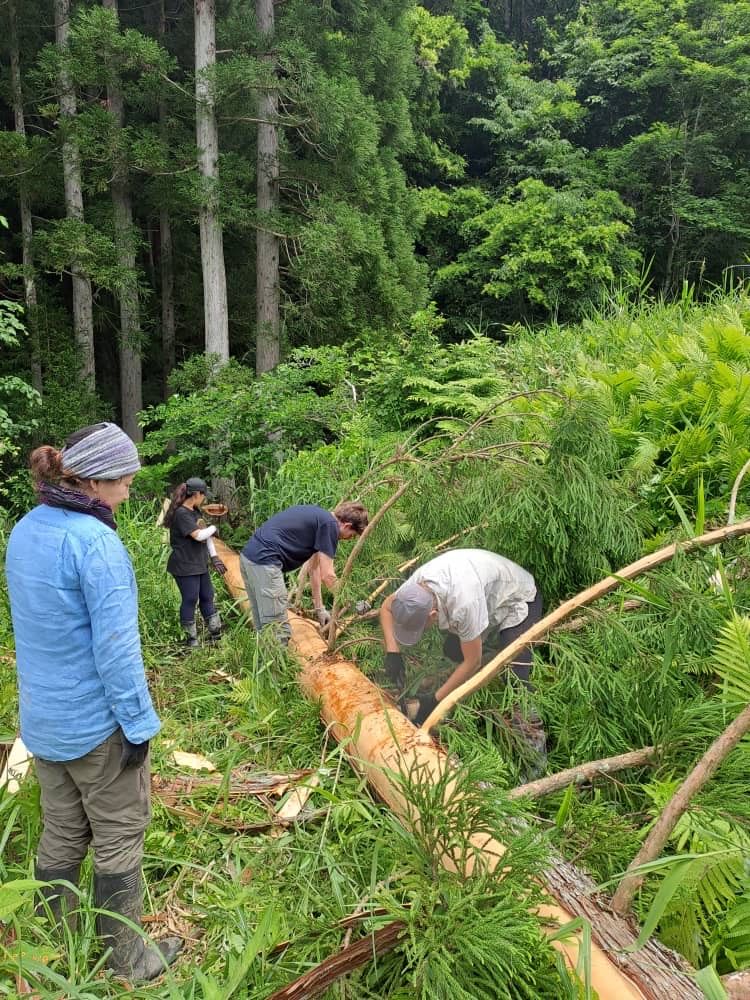
Stripping bark from felled trees so that the trunks would dry out insect-less before being used for roof repair on the traditional village houses. 

Our volunteer group harvesting seedlings ready for transplanting into the fields.                     

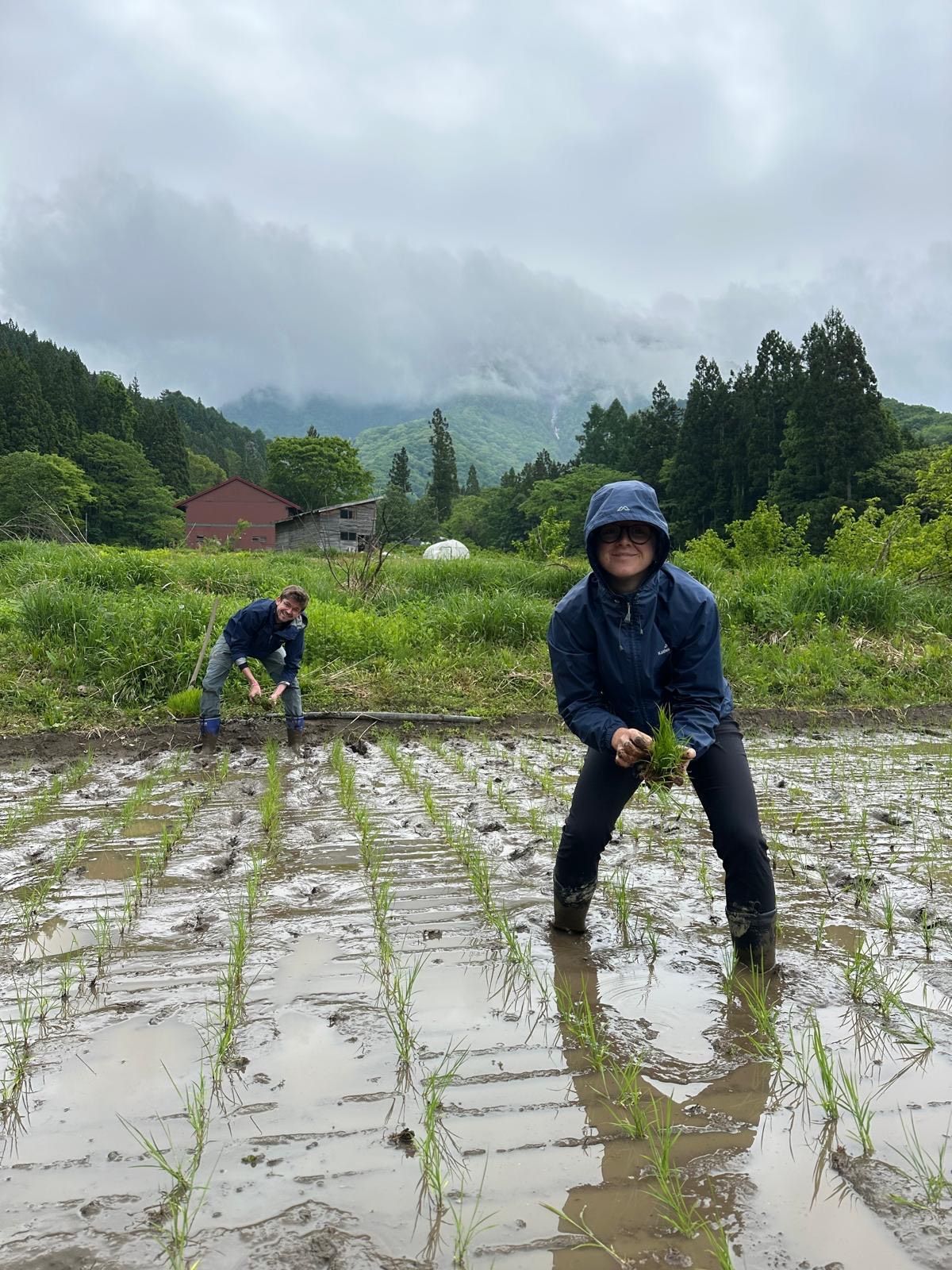
Rain on our first day planting rice seedlings.          

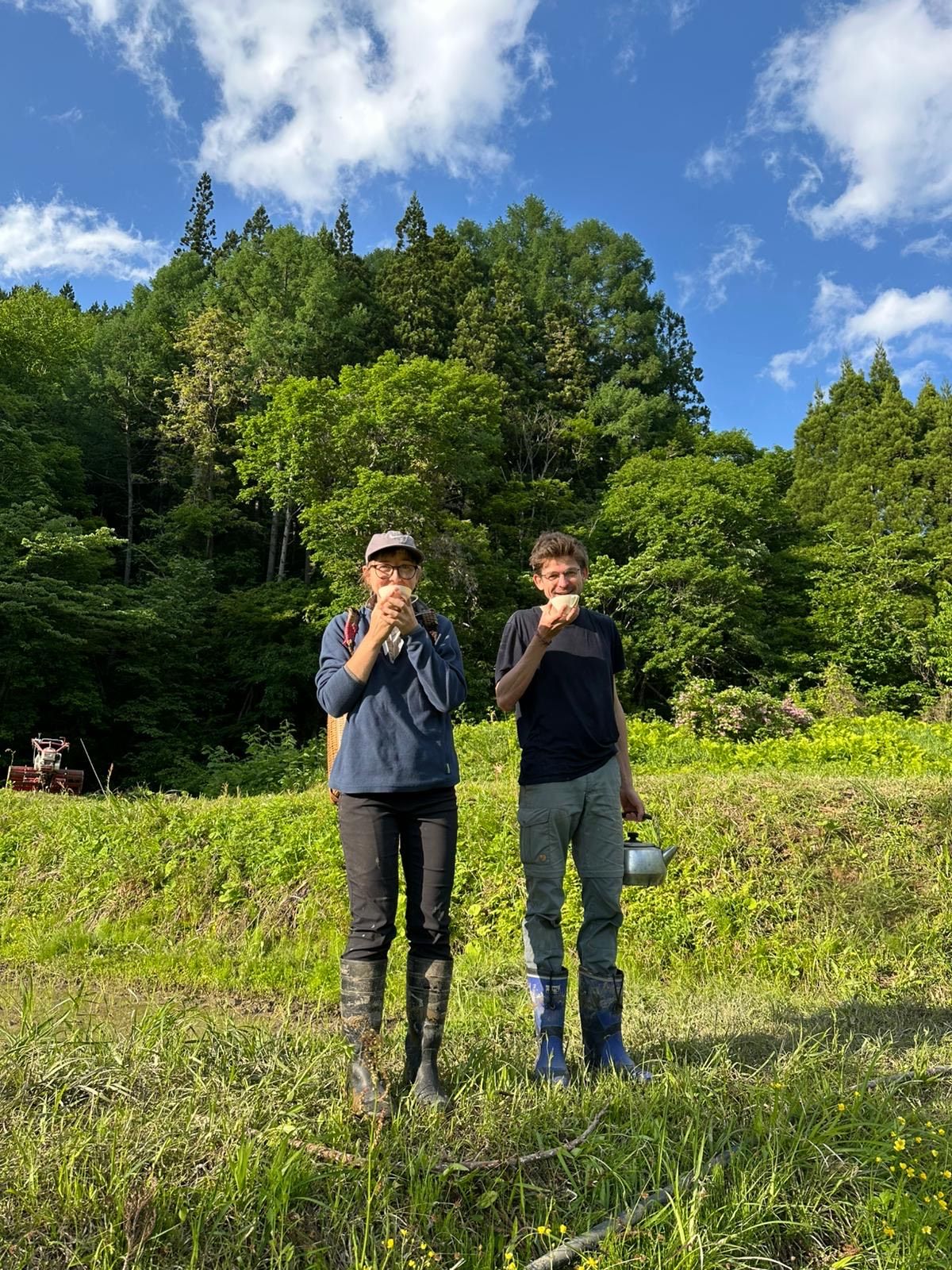
Afternoon tea break.       

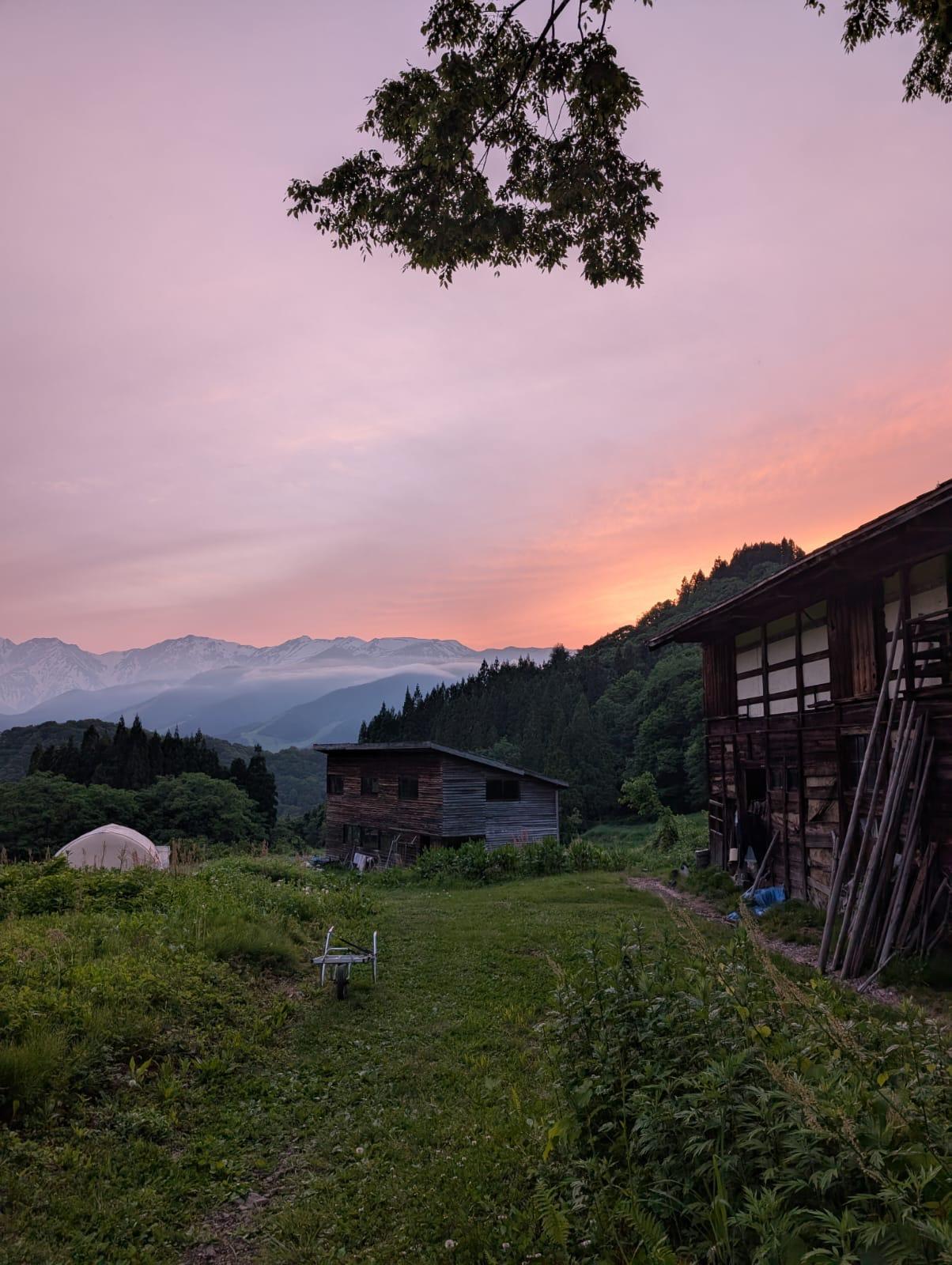
Amazing sunset over the alps; our village house in the foreground. 

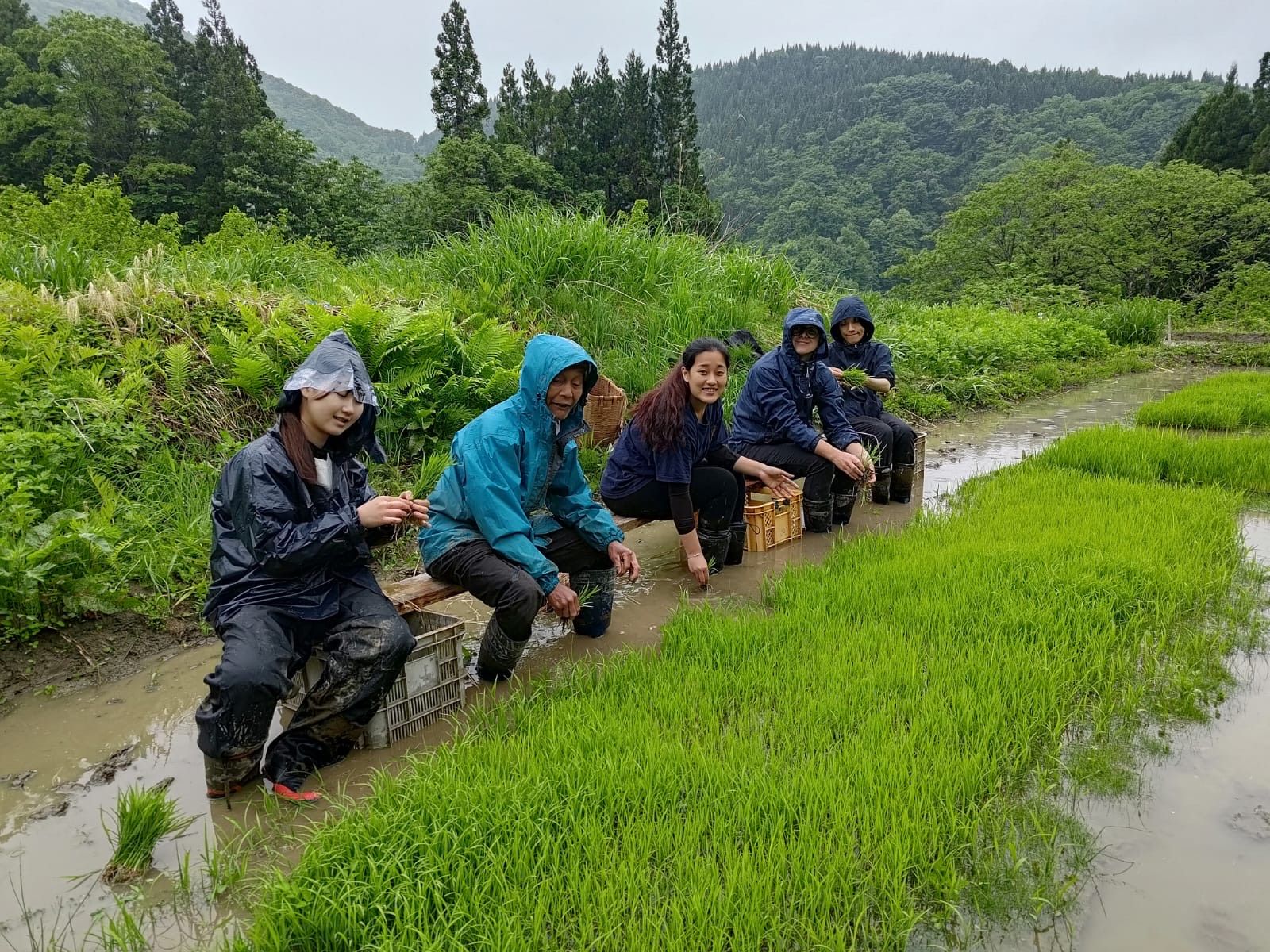
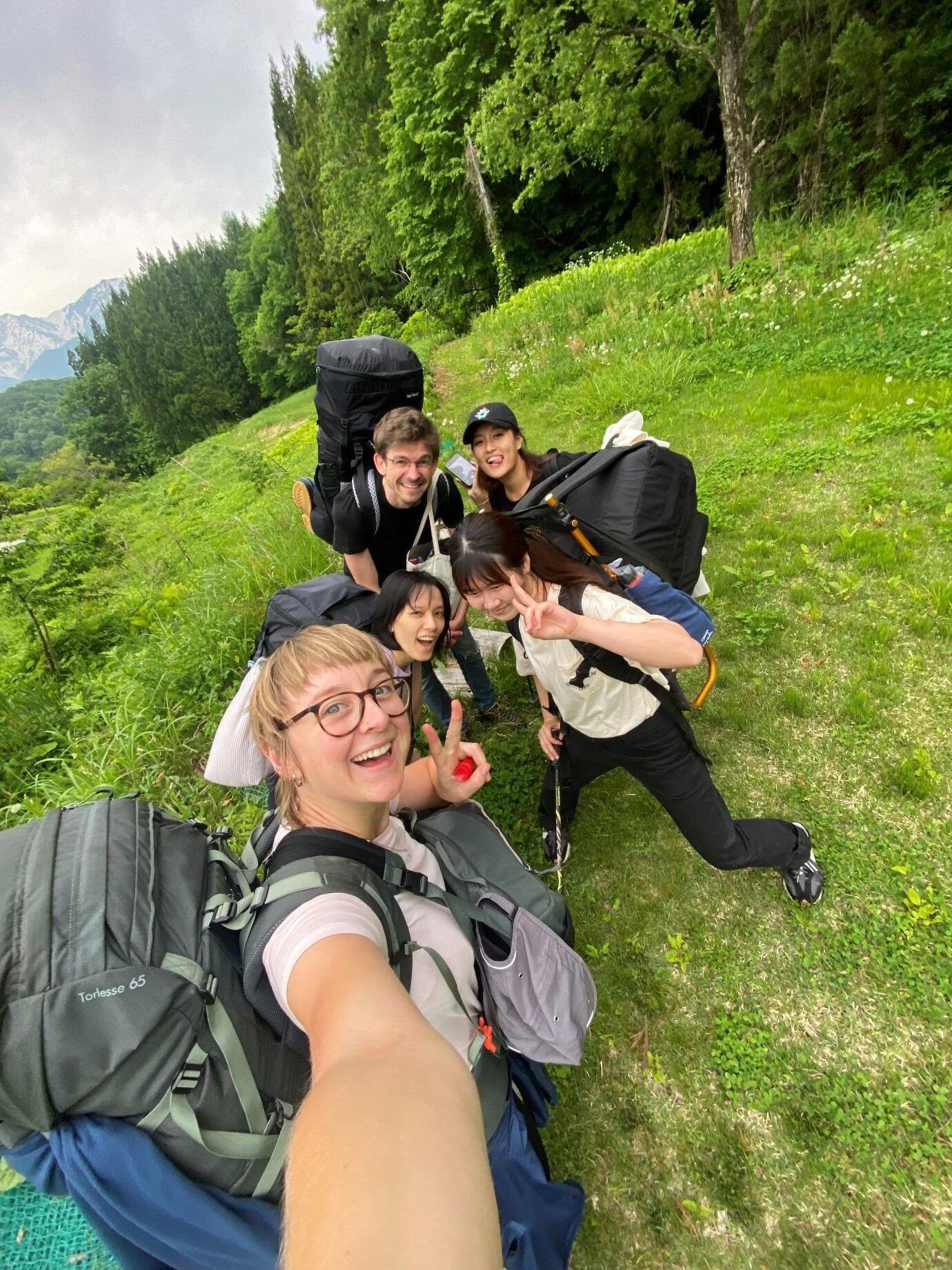
The Maki volunteers on our first day, from L-R: Australia, Khue (from Vietnam), Chris (from Germany), Yelena (from Hong Kong) and Rico (from Japan). 

Headshot:

MEMBERS BLOGS

22 Hours To Sell Apple Pies – This Is Why We Do It

22 Hours To Sell Apple Pies – This Is Why We Do It

  • Andrea Grugel, Germany


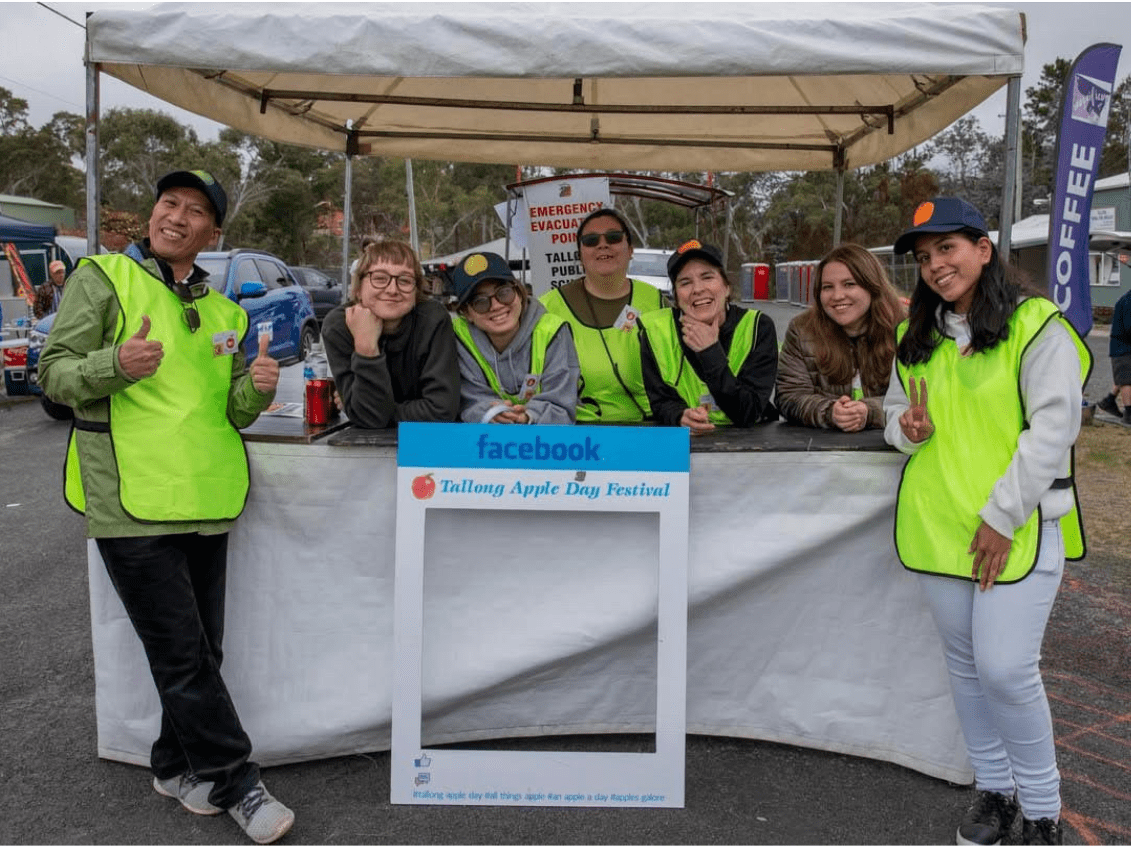
This year, I was fortunate to take part in an IVP project in the beautiful, welcoming community of Tallong, New South Wales, Australia. Together with six other volunteers from across the globe — Vietnam, Laos, Indonesia, Mexico, Russia, Australia, and Germany — we lent a hand at the Tallong Apple Day Festival.


When I told friends, colleagues, and family back home in Germany that I would be travelling halfway around the world to… sell apple pies, they smiled politely and shook their heads. “You’re doing what?!”


And honestly, I could not quite explain it either. Why spend 22 hours on a plane and give up precious vacation days — instead of lounging by a pool, going on safari, or learning to kite surf — just to help at a small-town festival?


Maybe a little story will help answer that.


Tallong, Sunday, September 28, 2025


After a full week of preparation — moving tables and chairs, removing bits of trash from lawns and pathways, setting up tents, sorting and labeling items, hanging exhibits, laminating signs, bagging apples, slicing pies, and nervously checking the weather forecast — the big day finally arrived.


People came from near and far to enjoy the festival: watching pig races and pie-eating contests, admiring vintage cars, cheering on woodcutters and medieval reenactors, listening to live music, and browsing stalls filled with cider, crafts, art, and, of course, apple pies.


From early morning we were rushing all over the place — taking tickets, fastening wristbands, lending a hand wherever needed, and yes, selling apple pies by the dozen.


Then, suddenly, it was over. The crowd dispersed, vendors packed up, and we finally stopped moving long enough to notice how tired — and how happy — we were.


Just then, a local photographer we had met during the setup came over for one last group photo. As he was leaving, he told us how deeply moved he felt seeing people from all over the world working side by side at a small-town festival in rural Australia. He explained that years ago, his daughter had volunteered in South America — and that, somehow, it felt as if something she had given back then had now come full circle to his own community.

Something had quietly returned.


In that moment — amid the packing up, the laughter, the bustle — his words sank in. I think all of us volunteers felt the same quiet emotion. It was a reminder of what a peaceful, connected world could look like: people giving freely, and one day, in some unexpected way, receiving something in return.


That is what volunteering is all about.

That is why we do it.


Thank you to everyone who made it possible for us to be part of this experience.

L to R:  Ou-ee from Laos, Charlotte from Australia, Dao from Vietnam, Helen from Indonesia, Andrea from Germany, Alina from Russia, Melissa from Mexico


SCI 2020 Report

SCI has just released the 2020 SCI annual Report.

https://sci.ngo/about-us/who-we-are/annual-report/